

Opioids belong to a group of medications that bind to opioid receptors in the brain to relieve pain and induce a relaxing and/or euphoric effect.
Natural (from the opium poppy, e.g., morphine, codeine), semi-synthetic (e.g., oxycodone, hydrocodone, heroin), and synthetic (e.g., fentanyl, methadone) opioids exist.
What Are Opioid Antagonists?
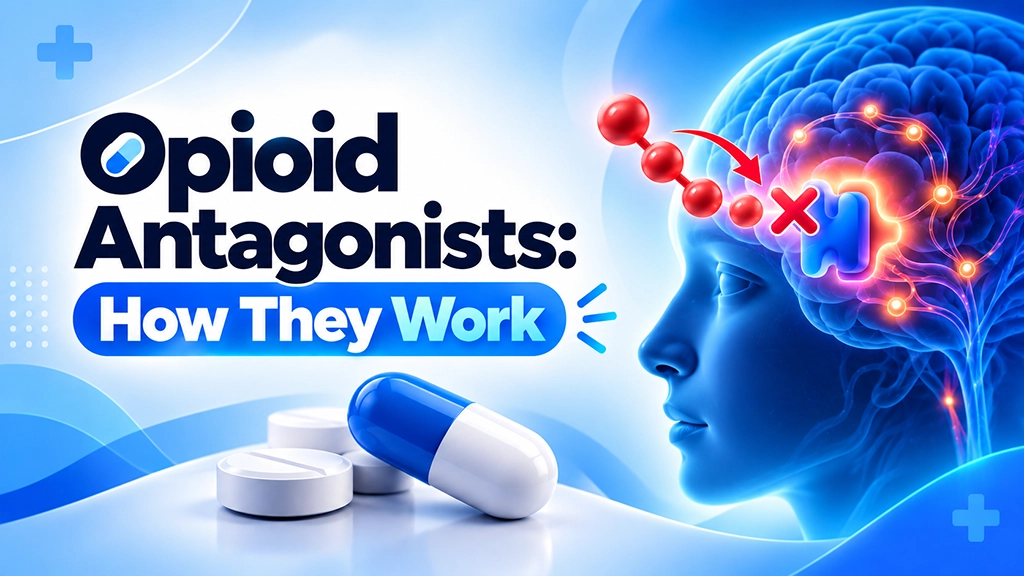
Opioid antagonists are agents that bind to opioid receptors in the nervous system, usually mu receptors, and counteract the actions of the opioids.
- Naloxone is a rapid-onset opioid antagonist and is used in acute cases to reverse an opioid overdose involving symptoms like respiratory depression and sedation.
- Naltrexone is the long-lasting form that can be administered orally and parenterally, and it is used to prevent the recurrence of opioid dependence disorder and to help in the treatment of alcohol use disorder through the reduction of cravings and inhibition of opioid actions.
- Another opioid antagonist is nalmefene, which is sometimes used for alcohol dependence and overdose.
Opioid antagonist drugs are also used in diagnostics to identify opioid dependence and during surgical operations to counteract opioid-induced respiratory depression without interfering with analgesia.
In simple words, opioids work by fitting into receptors in your brain to trigger responses like euphoria, pain relief, relaxation, and slowed breathing. What opioid antagonists do is fit into the same receptors but do not trigger them. This leaves no room for, or ‘blocks’, the opioids that cause the responses. The cravings and signals are reduced.
What conditions do opioid antagonists work on?
Opioid overdose
Naloxone and nalmefene work fast to counteract the effects of opioid-induced respiratory depression and sedation.
They quickly restore breathing and are often administered by emergency medical services.
Opioid use disorder
Naltrexone is an opioid antagonist blocking opioid receptors to prevent the euphoric effect of opioids. It is used as a maintenance medication to lower relapse rates; however, it does not address withdrawal symptoms. Even prescription opioids can cause opioid use disorder if the person hasn’t developed tolerance.
Alcohol use disorder
In addition, naltrexone lowers the euphoria associated with the consumption of alcohol and helps patients to avoid relapse.
Opioid-induced constipation
Peripherally acting antagonists (e.g., methylnaltrexone, naloxegol, naldemedine) block the effects of opioids in the gut without impacting pain relief. It is prescribed to patients taking opioids chronically and experiencing severe constipation.
What is an Opioid Agonist Antagonist?
Agonist–antagonist opioid medications are drugs for treating pain that have both agonistic and antagonistic effects. On the one hand, they activate some opioid receptors to relieve pain; on the other hand, these drugs block some of the opioid receptors to produce less euphoric effect and avoid respiratory issues associated with morphine and similar substances.
Thus, they can be prescribed for the treatment of moderate pain and also for the treatment of patients suffering from opioid dependence. Such drugs include buprenorphine and nalbuphine. Although they do not have such adverse effects as full opioids, they can have side effects including drowsiness, nausea, or mood changes, and they may induce withdrawal if the patient is addicted to more potent opioids.
Types of Opioid Antagonists for Recovery
Naloxone
Naloxone is an opioid antagonist, commercially available under brand names such as Narcan and Kloxxado. It binds to mu-opioid receptors, competing with other opioids such as heroin, fentanyl, morphine, and oxycodone, thus reversing respiratory depression, sedation, and hypotension.
It works in 1-2 minutes IV, 2-5 minutes IM/SC, or 8-13 minutes intranasally. Its effects last between 30-90 minutes, often for a shorter duration than that of the opioid to be antagonized, necessitating administration of multiple doses.
- Management of opioid overdose in an emergency setting.
- Reversing opioid depression in postoperative care.
- Neonatal respiratory depression associated with maternal opioids (with caution).
It is a commonly used opioid antagonist that blocks opioid receptors. It works rapidly to block off receptors, but it also wears off quickly. This means a person might need multiple doses to prevent the return of overdose symptoms.
Naloxone works wonders with misadministration of heroin, fentanyl, morphine, and prescription pain medicines. It is especially used during an overdose, as overdoses cause many deaths. It rapidly reverses symptoms like slow breathing and fatal respiratory depression.
Symptoms to notice in an overdose are:
- Slow breathing or heartbeat, inability to breathe
- Limp body and pale face
- Discoloured blue lips or nails
- Unresponsiveness to loud voices or a hard knuckle to the chest
- Small pupils
- Choking or snoring sounds
If exhibiting any of these signs, immediately call emergency services and administer a dose of naloxone. It can be done using a nasal spray or by injecting with a syringe at a 90 degree angle in the upper arm or thigh muscle. If there is no effect in 2-3 minutes, use a second dose into the other nostril. Do not worry about any negative effects, as naloxone is generally safe to use.
Naloxone is highly adaptable during medical emergencies. It can be administered via multiple routes:
- Intranasal
- Intramuscular
- Intravenous
- Subcutaneous
It is provided in injectable vials, pre-filled syringes (Zimhi), and nasal sprays (Narcan, Kloxxado). FDA-approved nasal sprays are easy to administer and widely available in community-based interventions.
However, it has the potential to cause acute withdrawal syndrome (nausea, sweating, agitation) in opioid-dependent patients. Since it is actually a safe substance, these symptoms are tolerable compared to the fatality of an opioid overdose. Use carefully in patients with cardiovascular conditions or pregnant females.
Between 1996 and 2014, 26,500 opioid overdoses were reversed by naloxone administration.
Read More: Naloxone dispensing statistics
Naltrexone
It is a synthetic opioid antagonist used for treatment of opioid use disorder (OUD) and alcohol use disorder (AUD). It acts competitively by binding to mu-opioid receptors to prevent the action of opioids (heroin, fentanyl, morphine, oxycodone) and decrease the rewarding effects of alcohol.
Oral tablets take effect in 30-60 minutes with a duration of 24 hours; the injectable form (Vivitrol) is active for ~1 month. Naltrexone is available as oral tablets (50 mg once daily) and a monthly intramuscular injection (380 mg).
- Maintenance therapy for opioid dependence after detoxification.
- Treatment of alcohol dependence to reduce heavy alcohol consumption.
- Used off-label for obesity (with bupropion), fibromyalgia, and autoimmune disorders.
Patients should not be taking opioids for 7-10 days before its administration to avoid precipitated withdrawal; requires regular liver function tests due to hepatotoxicity risk.
It has been proven to lower the risk of relapse with proper counseling and behavioral therapy.
Nalmefene
Nalmefene is a long-lasting opioid receptor antagonist similar to naloxone, which is used in some countries in the treatment of alcohol dependence and as an alternative to naloxone in managing cases of overdosage with opioids.
It is a synthetic opioid antagonist approved in Europe for alcohol use disorder.
It induces blockade of mu-opioid receptors, resulting in reduction of craving for substances and preventing opioid effects. It comes with a quick onset of action (within minutes); the duration is several hours (longer than naloxone).
- Reduction of heavy drinking in alcohol dependence.
- Reversal of emergency overdose with opioids (as an alternative to naloxone).
It causes withdrawal syndrome in patients dependent on opioids; nausea and dizziness are common.
Methylnaltrexone
Methylnaltrexone is a peripheral opioid antagonist prescribed to relieve opioid-induced constipation (OIC). In contrast to naloxone and naltrexone, methylnaltrexone does not penetrate into the central nervous system; hence, relieving constipation without influencing pain relief.
It is a quaternary analogue of naltrexone that acts exclusively in the gut. It works by opioid receptor blockade in the gastrointestinal tract, which restores bowel movements. The onset of action is within hours; the duration depends on the dosage and route of administration.
It is an opioid antagonist medication that works against opioid induced constipation in patients suffering from advanced disease or chronic pain.
Methylnaltrexone is safe overall; adverse reactions are abdominal pain, diarrhea, and flatulence.
Alvimopan
Alvimopan is an opioid antagonist that acts peripherally in the body and is used in hospitals to restore normal functioning of the intestine after surgery. It blocks the opioid receptors of the gut, stopping the development of ileus caused by opioid drugs.
It is taken orally and works quickly; however, it is only used for a short while after surgery.
It is used for the prevention of postoperative ileus in opioid-treated patients. Its use is restricted because of cardiovascular risks.
How to prevent opioid overdose?
Opioids can be fatal when misused, even when prescribed. This is where naloxone is a life-saving intervention. It is used for a quick reversal of symptoms but requires a potentially higher dosage.
About 3.2% of Americans misuse opioids, and 75% of overdose deaths involve opioids. Opioids can cause overdoses when it disrupts the brain receptors with high drug administration. It affects the part of the brain that controls breathing. As oxygen is deprived, there is a risk of coma, slow heart rate, cardiac arrest, permanent brain damage, and death.
Risk factors of opioid overdose include:
- Taking a higher dose than originally prescribed
- Mixing opioids with central nervous system depressants
- Returning to opioid use after a period of abstinence when the body’s tolerance has reduced
- Opioid injections are more concentrated and faster
To prevent a potential overdose, one must follow some proven methods:
- Only take the clinically prescribed dose of opioid drugs.
- Even prescriptions can cause addiction. Therefore, stay vigilant of the risks and side effects associate to opioid drugs.
- Read news about illegally made fentanyl or fentanyl laced or swapped medications. If possible, keep fentanyl strips handy.
- Keep naloxone handy if you or your close ones have an opioid use disorder. Learn about naloxone dose administration in case anyone shows signs of an opioid overdose.
Avoiding the possibility of an opioid overdose requires being mindful of a few simple precautions. Always follow the prescription of any drug to the letter, and never combine opioids with alcohol or sedatives since doing so heightens the risk of an overdose.
Make sure that all drugs are kept out of reach of other people, particularly small children. Should one take opioids regularly, having naloxone on hand is recommended — it is a life-saving antidote used in case of an overdose.
It is also crucial to look out for symptoms such as slow breathing and excessive sleepiness and to call an ambulance in case of their occurrence.
FAQs
Yes, in some overdose cases, people are often discovered with the needle still in their arms. This is because opioids affect individuals quickly, resulting in respiratory failure and unconsciousness before removing the needle.
August 31 is known as International Overdose Awareness Day, an international initiative to create awareness about overdose, decrease the stigmatization around overdose, and remember people who died of overdose.
Naloxone is an opioid antagonist that acts quickly in reversing overdose symptoms such as respiratory failure and unconsciousness. The drug is administered via nasal spray or injection.
Naltrexone is a long-acting antagonist that serves for maintenance in opioid addiction treatment and alcohol dependence treatment, whereas naloxone is applied in emergencies to counteract overdoses.
Some of the symptoms include respiratory failure, a limp body, pale or blue lips and nails, pinpoint pupils, snoring sounds, vomiting, and being non-responsive.
Yes, opioid-dependent patients may experience withdrawal symptoms after administration of naloxone, although the effects are manageable and much better than dying.