
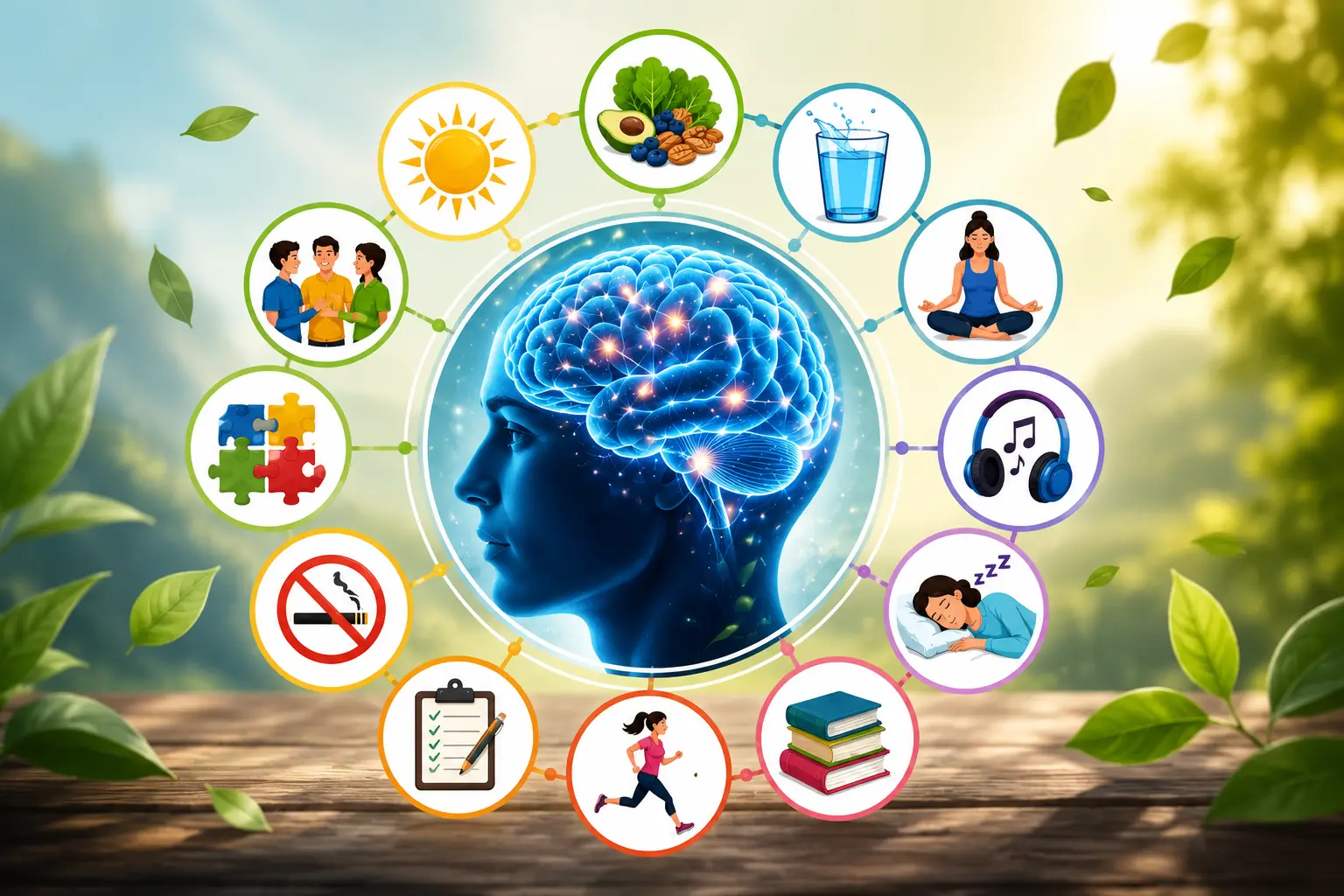


Your brain is more powerful than you think. It has 86 billion neurons and 2.5 petabytes, or 2.5 million gigabytes of storage capacity. If you are struggling to remember your everyday necessities, it doesn’t directly mean that you are not ‘intelligent’ enough. In fact, having a sharp brain now is possible, and it is way simpler than it sounds.
Synapses and Neurons
Let’s first learn about brain function to break it down. A single neuron can have multiple synapses. A synapse comes from Greek words ‘syn’ and ‘hapsis ’, which means together and joining.
A synapse is a gap between a neuron and a point of communication, like a muscle or another neuron. This communication between two brain cells is called neurotransmission. This is carried out by chemical messengers between the gaps called synapses.
Of course, the brain has a separate structure for memory function. They are the hippocampus, amygdala, cerebellum, basal ganglia, and prefrontal cortex.
- The amygdala is associated with emotions like fear and anger.
- The hippocampus is responsible for transforming new memories into long-term memory. It is also involved with recognition memory and locational memory.
- The cerebellum controls motor learning, procedural skills and reflexes.
- The prefrontal cortex is associated with cognitive function, working memory, and short-term memory.
- The basal ganglia are linked to learning, coordination, movement and habits.
How to Improve Your Memory Naturally
Some simple, fun yet natural ways to improve memory. Reduce stress, eat healthy, exercise, travel, and do whatever you love to do! Adapt these lifestyles seamlessly and feel the difference.
- Supercharge your memory with food and diet.
This is the simplest way to improve your memory naturally. Unhealthy foods can cause cell damage, brain inflammation, and brain cell overactivity. Avoid fried foods and sugary foods.
- Add green tea and berry smoothies into your diet to improve your memory naturally. These foods have flavonoids that reduce inflammation and improve recall.
- Adapt the Mediterranean diet of grains, green vegetables, fruits, eggs, olive oil, and nuts.
- Fatty and oily fish are also a healthy addition because of essential omega-3 fatty acids. These foods incorporate antioxidants into your daily consumption, which reduce brain inflammation. Antioxidants are also very important to prevent chronic diseases and health conditions.
- Blueberries reduce inflammation and oxidative stress.
- Replace milk chocolate with dark chocolate, as its 70% cocoa content contains flavonoids, which are essential for a sharper brain and reduced cognitive decline. Standard chocolate has more added sugar than cocoa, which can degrade your memory power.
- Turmeric is anti-inflammatory; coffee increases alertness and short-term memory, and pumpkin seeds decrease oxidative stress.
These nutritious foods also increase the healthy bacteria within your stomach. This improves the gut-brain connection, brain function for memory, and nerve signals.
What You Should Avoid: Refrain from refined carbs, alcohol, sugary foods, and processed foods. Obesity is also linked to memory degradation.
- Exercise everyday
Exercise is not just for the body, but also for the mind. It releases dopamine, which is a good mood hormone. Good mood and sleep that come from exercise are directly linked to better thinking skills. Walking and aerobic exercises are natural ways to improve memory. Exercise regularly and towards a goal, and watch your cognitive skills boost within 6 months.
Strength training, resistance training, and skill-based activities like sports are also mentally stimulating. Regular workouts improve brain and overall performance. Studies have shown increased electrochemical activity within the brain after exercise.
- Practice Mindfulness
Mindfulness is not limited to meditation– it is a broad spectrum of calmness and peace. Although meditation itself has various types, many other interesting activities promote mindfulness. Mindfulness reduces stress, increases concentration and attention span, and connects you to the present moment.
- Try gardening, walking, mindful stretching, painting, or even listening to slow music. These incorporate visual processing and sensory engagement that can help you enhance reasoning, spatial memory, cognitive ability, and improve your memory naturally.
- Yoga and meditation increase blood circulation to the brain, release stress, and beneficial chemicals. This controls your emotions, ability to learn, and helps recall things within your memory.
You can even try breathing exercises to calm you down and feel the moment. Stress, frustration, and overwhelming feelings can affect your learning potential.
- Ensure 8 Hours of Sleep
There is a lot of science linked to this point. How the brain chooses to store, categorise, and remember certain information is a complex and kind of mysterious process. Better sleep is linked to better retention of weaker memories. This is because of activation of neural circuits during sleep and even naps. 8 hours of sleep also improves cognitive function, clarity, and memory retention.
A regular sleep cycle is also effective in improving your memory naturally. Lack of sleep is linked to Alzheimer’s disease and dementia. There is no artificial, definite, or permanent solution for sleep issues. Only natural methods and responding to the body’s habits or signals can improve your sleep cycle.
- Increased Brain Activity
Try playing cards, puzzles, sudoku, and other mind-stimulating activities. Look for memory training games, drills, and activities available online to improve your memory naturally. Physical movement can help your spatial memory. Try doing something out of the ordinary, like using another hand for a daily routine, or choosing a new path to your daily destination. Even maths can improve your problem-solving skills and working memory.
Dancing speeds up your brain, and enhancing vocabulary can help with visual and auditory memory. Take in your surroundings and tiny details that you normally miss to embed them in your memory. Your brain tends to avoid retaining insignificant things in memory.
- Start Reading Books
This is an overall workout for your brain. Reading activates your brain, reduces stress, relaxes your brain, and creates neural networks. Your short-term memory stays active during reading, neurotransmitters are released, and it improves concentration. Reading improves your memory naturally and creates new brain connectivity.
- Start a New Hobby
Starting a new hobby shifts your brain activity to something it is not used to. Your brain is wired to recall and retain familiar things, so a new hobby can be challenging.
- Studies have shown that playing an instrument can reduce the decline of brain function and improve your memory naturally.
- Painting helps you relax and train visual processing, which directly helps memory retention.
- Play word games to improve focus and improve your memory naturally.
- Gardening doesn’t only cultivate empathy but also good habits. As you become familiar with the timely patterns of plant life, it boosts routine memorisation and planning. It is a form of sensory stimulation, stress reduction, and relaxation. All these experiences are important to improve your memory naturally.
- Learn a New Language
This observation is a stark and scientific difference between monolinguals and bilinguals. Bilinguals are proven to have more grey matter, such as neurons and axons. New experiences stimulate the brain for the formation of newer connections. Such factors are important to prevent neurological conditions and memory disorders. This helps keep your brain active, improve cognitive function, and improve your memory naturally.
- Add a New Skill
A new skill helps you learn and use new abilities to improve your memory naturally. This speeds up your brain processes and changes existing neural connections. In scientific language, this promotes neurogenesis and neuroplasticity.
This releases dopamine, which stimulates your hippocampus and amygdala. This is a process to create neural conditions for new functions and activities.
Your brain creates new synaptic pathways to process information differently. New practical skills are linked to mental agility and motivation. Try being more social for strong neural connectivity, memory, cognitive strength, and recognition.
- Try New Things
Try travelling to new places and learn new routes. New experiences release dopamine, activate parts and connections of the brain, and improve your memory naturally. These experiences trigger your brain to work in an unrecognised way.
You step out of your comfort zone, and new information enters differently. Your brain remembers and adapts to routine things, so changing things up can help your brain function. Change your normal location for work or other routine things, change task order, reschedule your timings, etc.
- Cut Down on Excess Weight
Maintaining ideal weight improves brain connectivity and reduces memory or cognitive decline as you age. Unnecessary fat impacts blood flow, increases inflammation, and even causes dementia.
A note on inflammation: Inflammation can cause diseases like Alzheimer’s. It damages nerve cells and synapses and causes brain fog.
- Play Practice
Find tiny everyday things to improvise on to improve your memory naturally. Objects linked to sensations tend to be retained longer in memory.
- For example, you still remember seeing beautiful scenery and tiny details about it from years ago.
- Simple games, puzzles, or even practising something can be great game-changers for your memory.
- Be more social to increase familiarity with new people.
- Memories linked to specific emotions are more likely to be retained for longer and vividly. For example, you still recall tiny details about a tragic incident.
- Play memory games, use mnemonics, or write down things to improve your memory naturally.
- Recognise patterns that help you remember things. For example, if you find speaking easier to remember something rather than listening or reading, use that technique.
- Generic things are easier to remember. They are universal and linked to many different concepts. To remember names or dates, pay attention to detail. Try to find or link things ot the name that help you remember that information. For example, if a historical person has a similarity to your friend or sister, think about the similarity more.
- Consistency is key in any small or large changes that you make for better memory. The possibilities are experimental and endless.
Conclusion
Find the tactics and strategies that work best for you to improve your memory naturally. Maybe it is because you relate to it, or simply because you find it fun. Combine this with consistency and incorporate in your lifestyle. Find comfort in activities that might release your stress or even discover a new skill that you are good at.
Your brain has a huge capacity; you just need to learn how to engage its different parts. You memorise new things; synapses are created to link pathways. Try adding new activities like recalling a grocery list or doing creative origami. Your brain loves organisation. Keep things organised at your work table or study table. Create an environment that helps you focus and calm down. Try chunking, association, or new games to improve your memory naturally.
The new changes to your lifestyle don’t just enhance your brain’s power. It also develops new skills and associate you with new hobbies and fun activities.
What is a synapse?
Synapses can not be seen with the naked eye. They are tiny gaps between two nerve cells, or between a neuron and a muscle. The main function is to pass chemical and electrical signals between them. This facilitates the passing and processing of information within the brain. To memorise new information, new synapses are formed.
What is a Mediterranean diet?
This is the ultimate healthy diet to prevent chronic diseases and improve your memory naturally. This includes green and leafy vegetables, grains, fruits, olive oil, nuts, etc.
Which part of the brain is responsible for memory?
The brain has several different parts for memory function. They are the cerebellum, frontal cortex, basal ganglia, amygdala, neocortex, and hippocampus.
How does exercise improve brain function?
Exercise releases beneficial hormones, promotes new cell formation in the hippocampus, and increases blood circulation to the brain. It strengthens brain function and performance. This protects your memory and brain function and improves your thinking skills.
What are some memory-enhancing games?
Scrabble, sudoku, jigsaw puzzles, chess, crosswords, and playing cards are some games that help you improve your memory naturally.