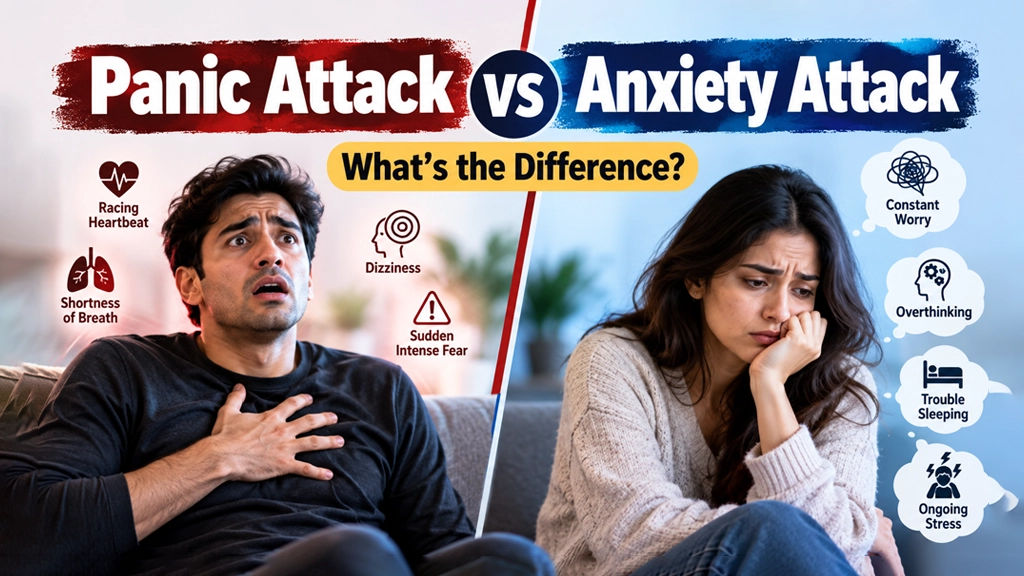


To many people, panic and anxiety attacks feel very similar and confusing because both have overlapping physical and emotional symptoms. However, panic attacks are much more intense and sudden—both have differences in intensity, duration, triggers, and onset. One thing very common and confusing in panic attack vs anxiety attack is heightened fear responses.
What is a panic attack vs anxiety attack: Similarities
- Panic attack vs anxiety attack: Both involve the body’s fight-or-flight response, adrenaline surges, and heart palpitations.
- In panic attack vs anxiety attack, both trigger intense fear, fast breathing, or fear of danger.
- Overlapping symptoms of panic attack vs anxiety attack are sweating, dizziness, chest discomfort, and trembling.
- Other similarities between panic attack vs anxiety attacks are shortness of breath, nausea or an upset stomach, restlessness, and difficulty concentrating.
What is a panic attack?
A panic attack is defined as a period of intense fear and is recognized in the DSM-5-TR as part of panic disorder when attacks are recurrent. It triggers the body’s fight-or-flight response to a sense of danger. Panic attack vs anxiety attack: both trigger the body’s fight-or-flight response.
The panic attack is experienced as the body suddenly entering survival mode. Medically, it starts with an adrenaline rush, resulting in a fast heartbeat and rapid breathing. There is a tendency for the chest to constrict, causing symptoms of a heart attack.
Sweating, trembling, and dizziness are common, but there are instances wherein some people become numb or tingle in certain parts of the body. Physical symptoms include gastrointestinal issues like nausea and stomach problems.
Emotionally, the characteristic of this condition is the feeling of doom or the overwhelming feeling of losing control, passing out, or dying.
People also go through derealization, or the feeling of the world becoming surreal, as well as depersonalization, or the detachment from the self. This condition usually peaks within 10 minutes and lasts up to 20 minutes, although the after-effects like fatigue and anxiety may continue. Panic attack vs anxiety attack: the latter can last for hours or even weeks.
Even though the condition is non-life-threatening, it is extremely stressful, which causes patients to avoid places where they feel like having another episode.
Symptoms
The victim feels out of control and feels a fear of a sense of danger.
- Heart palpitations or accelerated heartbeat
- Profuse sweating
- Shaking or trembling
- Shortness of breath or feeling smothered
- Feeling of choking
- Pain, tightness, or discomfort in the chest
- Nausea or abdominal distress
- Dizziness, light-headedness, or feeling faint
- Derealization (feelings of unreality) or depersonalization (feeling detached from oneself)
- Fear of losing control
- Fear of impending death
- Numbness or tingling sensations in extremities
Causes
A panic attack is an unexpected episode of terror caused by the improper activation of the brain’s fear circuitry, and risk factors include genetics, past trauma, and stress; medical treatment involves psychotherapy (mostly cognitive behavioral therapy) and medication (SSRI, SNRI, or short-term benzodiazepines).
- Genetic vulnerability: A family history of panic disorder or anxiety.
- Neurochemical: Imbalance of neurotransmitters like serotonin, norepinephrine, or GABA, leading to fear regulation dysfunction.
- Amygdala: Dysregulation of fear circuitry and triggering of unnecessary fight-or-flight responses.
- Medical disorders: Certain disorders (asthma, heart problems, and thyroid disorders) can lead to panic attacks.
- Stressors: Stressful events in life (like the death of a close person) often cause attacks. This is common in both panic attack vs anxiety attack.
- Traumas: Past traumas (like physical abuse) are common causes.
- Substances: Excessive amounts of stimulants and substance withdrawal can lead to panic attacks.
Risk factors
- Family history of panic disorder or anxiety.
- Childhood traumas such as sexual abuse or neglect.
- Significant stressors like divorce, illness, or losing a job.
- Existing mental disorders like depression, phobias, or PTSD.
- Unhealthy lifestyle like smoking, excessive caffeine consumption, or poor sleep.
- Gender/age: Women suffer from panic disorder more frequently. It usually affects people during their teenage years and early twenties.
Medical treatments
Psychotherapy
- Cognitive Behavioral Therapy (CBT)—Helps patients re-evaluate panic symptoms and diminish catastrophic thinking. Used in both panic attack vs anxiety attack.
- Exposure Therapy—Slowly exposing patients to their fears.
Medication
- Selective Serotonin Reuptake Inhibitors (SSRIs) (fluoxetine, sertraline, paroxetine)—First-line treatment for long-term use.
- Serotonin Norepinephrine Reuptake Inhibitors (SNRIs) (venlafaxine, duloxetine)—Alternative antidepressants.
- Benzodiazepines (alprazolam, clonazepam)—Quick-acting but can lead to dependence.
- Beta-blockers—Sometimes prescribed for bodily symptoms such as palpitations.
Lifestyle & Self-Care
- Exercise and yoga help manage stress.
- Breathing techniques help with hyperventilation.
- Sleep hygiene maintains mood stability.
- Avoid caffeine, alcohol, and nicotine
What are anxiety attacks?
An anxiety attack is not a formally recognized condition according to the DSM-5-TR, but it is a term that is used commonly to refer to an elevated state of anxiety that interferes with normal functioning. In panic attack vs anxiety attack, the latter is not formally categorized in medical definitions.
As opposed to panic attacks, which occur abruptly, anxiety attacks develop slowly as a result of some stressors, and they can last for longer periods of time. These attacks occur mostly as a result of GAD, social anxiety disorder, and phobias. Anxiety attacks are prolonged periods of excessive worrying and fear and are often caused by stressors.
Symptoms
- Restlessness or irritability
- Muscle tension and headaches
- Rapid heartbeat and palpitations
- Shortness of breath or hyperventilation
- Sweating or trembling
- Trouble concentrating or racing thoughts
- Insomnia and fatigue
- Nausea or digestive problems
- Dread or impending doom
- Avoidant behaviors to escape triggers
Causes
- Chemical imbalance: Imbalance of chemicals such as serotonin, norepinephrine, dopamine, and GABA.
- Stressful life events: Divorce, illness, financial trouble.
- Past trauma: Sexual, emotional, or physical abuse during childhood.
- Illnesses: Thyroid problems, heart disease, asthma.
- Substances: Too much caffeine or withdrawal from alcohol or drugs.
Risk Factors
- Family history of anxiety or depression.
- Childhood trauma or adverse events.
- Chronic stress from work, personal life, or illness.
- Other psychological disorders, such as PTSD or phobias.
- An unhealthy lifestyle (smoking, lack of sleep, too much caffeine).
- Age and gender: Higher rates among women, especially in young adulthood.
Medical Treatments
Psychotherapy
Cognitive Behavioral Therapy: Restructures thought patterns and reduces psychological catastrophic thinking. Used commonly in both panic attack vs anxiety attack.
Exposure Therapy: Gradual exposure to feared situations
Mindfulness-based therapy: Increases present moment awareness when the victim loses control of the surroundings.
Medications
- SSRIs (Sertraline, Fluoxetine)—First choice for treatment.
- SNRIs (Venlafaxine, Duloxetine).
- Benzodiazepines—Short-term relief; have a risk of dependence.
- Beta blockers – Help to relieve physical symptoms like palpitations.
Lifestyle/Self-Care
- Exercising and yoga.
- Breathing exercises to overcome hyperventilation.
- Improving sleep hygiene to regulate mood.
What is an anxiety disorder?
An anxiety disorder is different from anxiety attacks because a disorder is prolonged anxiety that doesn’t go away. It can cause serious complications like suicidal ideation, depression, substance abuse, and chronic pain.
Generalized anxiety disorder
When you can’t go back to your previous relaxed state and feel stressed about common daily situations or surroundings, it is called generalized anxiety disorder.
Post-Traumatic Stress Disorder
PTSD develops after a traumatic or emotionally harmful life event that causes fear. Symptoms include intrusive involuntary thoughts, mood swings, avoidance, depressive symptoms, and reactive triggers.
Panic Disorder
Panic attacks are sudden and unexpected episodes of terror with symptoms like a racing heart, breathing trouble, and dizziness. It can feel like a heart attack, and if this becomes too frequent, it is called a panic disorder.
Agoraphobia
It is the intense feeling of being trapped or helpless and is most likely to develop in the 20s. It is also characterized by the fear of having a panic attack in places where you can’t escape.
Separation Anxiety Disorder
It is the mental health condition marked by extreme fear and anxiety about being away from home or people you have an emotional bond with.
Panic attack vs anxiety attack: Differences
| Factors | Anxiety attack | Panic attack |
| Definition | Informal term for episodes of heightened anxiety often linked to stressors. Not a DSM 5 diagnosis. | Clinically included in DSM-5 as sudden urges, outbursts of fear, and discomfort. Can feel similar to a heart attack. |
| Onset | Gradual development over hours, days, or weeks. | Sudden and unexpected episode that peaks in 10 to 20 minutes. |
| Duration | Can persist for hours or longer. | Typically lasts 5 to 10 minutes, followed by tiredness. |
| Triggers | Tied to identifiable stressors like work, finances, or a life event | Clinically unclear triggers; emerges unexpectedly |
| Intensity | Less overwhelming than panic, yet severe | Extremely intense, often mistaken for a heart attack |
| Psychological symptoms | Restlessness, lack of concentration, lasting worry, fear of the future, dread | Fear of dying, losing control, depersonalization, derealization |
| Physical symptoms | Fatigue, muscle tension, insomnia, nausea, headaches | Heart palpitations, chest pain, trembling, sweating, numbness, choking sensation, dizziness |
| Medical distinction | Not medically or clinically defined and overlapping with its types | Medically and formally included in DSM 5 TR |
| Treatment | Psychotherapy, lifestyle changes | Psychotherapy, medications |
Example demonstrating differences between panic attack vs anxiety attack
The record
Mrs. Madhuri, a 34-year-old, describes two different episodes of distress and discomfort with a gap of two weeks, close to symptoms of panic attack vs anxiety attack. Over several weeks, she went through acute, progressive worry about occupational performance and family responsibilities. She experienced sleep disturbance, muscle tension, gastrointestinal discomfort, and disoriented concentration.
Symptoms waxed, waned, and appeared consistently over the course of a day and correlated temporally with identifiable stressors at work and at home. Once, the cluster of symptoms developed slowly over the course of a day, peaked in the evening, and resolved with adequate rest and social support.
After two weeks passed…,
She had a sudden occurrence of palpitations, tightness of the chest, diaphoresis, tremor, lightheadedness, and feeling unreal while waiting for the bus. This episode of symptoms reached its peak within minutes, lasted for about 20 minutes, and resolved spontaneously. During this episode, she reported fear of dying and loss of control over her body.
Clinical assessment and examination
During the sudden occurrence, there was tachycardia and hyperventilation on vital signs; cardiovascular and neurological examinations revealed no other abnormalities. During immediate point-of-care testing, no medical condition was detected.
Clinical Interpretation
The chronic presentation with stress-related symptoms, which consists of anticipatory anxiety and somatic symptoms, is consistent with an anxiety episode. The acute presentation with symptoms reaching maximum in minutes, including catastrophic cognitions and peak autonomic symptoms, is consistent with a panic attack.
Management
Urgent medical and psychiatric evaluations should be done after excluding cardiovascular or endocrine causes for acute symptoms. Simple coping and treatment techniques include breathing and grounding exercises, psychoeducation, and structured cognitive behavioral interventions. This is followed by stress management to evaluate panic vs anxiety attack.
Read more: How to Stop Anxiety After Drinking Alcohol
FAQs
- An anxiety disorder is a prolonged condition of distress that doesn’t go away.
- It is getting in the way of your important daily activities.
- If your anxiety is severe but not constant or prolonged, then it is not a disorder.
- Repeated panic attacks can be a sign of an anxiety disorder.
- Normal people feel anxiety over a fearful or stressful situation. People with an anxiety disorder feel it under uncertain circumstances without any identifiable reason. They might be aware of this but can’t control it.
Selective serotonin reuptake inhibitors (SSRIs) are the first choice of antidepressants for panic attacks. The Food and Drug Administration has approved SSRIs like Zoloft, Prozac, and Paxil.
Serotonin and norepinephrine reuptake inhibitors (SNRIs) like Effexor XR is FDA- approved antidepressant for panic attacks.
Benzodiazepines are central nervous system antidepressants like Klonopin and Xanax, which are FDA-approved.
It is a mental health condition marked by extreme fear and anxiety about being away from home or people you have an emotional bond with.
Panic attacks are not life-threatening, but they can feel like a heart attack and cause extreme terror and palpitations.
You can talk yourself down from a panic attack by using short, grounding coping statements that remind your brain you are safe and that the feeling will pass. Tell yourself:
- You are safe from danger, and it is temporary discomfort.
- My body is ringing false alarm bells, but it will pass.
- I went through this before, so I will do it now.
Morning panic attacks are primarily caused by a natural biological surge of stress hormones combined with a sensitized nervous system. It is caused by the cortisol awakening response, low blood sugar, anticipatory anxiety, etc.