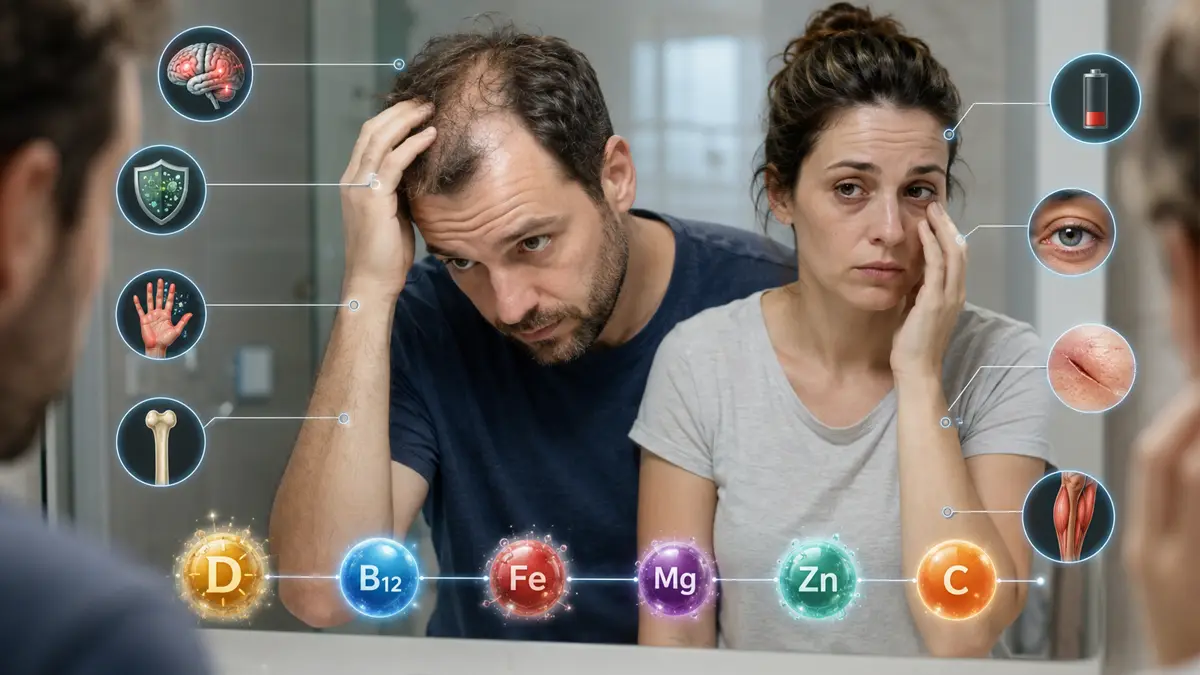


Most of us go through our days feeling a little tired, a little off, or noticing small changes in our skin, hair, or mood – and we brush it off as stress, ageing, or just “one of those days”. But here’s the truth: many of these everyday complaints are actually your body’s way of waving a red flag. They are warning signs that something important is missing — a vitamin, a mineral, a nutrient that your cells desperately need to keep you running at your best.
Vitamin and mineral deficiencies are far more common than most people realise. According to global health data, billions of people worldwide suffer from at least one micronutrient deficiency. And the scary part? Many of these deficiencies go undiagnosed for years — silently causing damage to your bones, brain, immune system, and heart — simply because the signs were ignored or misunderstood.
This article breaks down the 10 most important warning signs of vitamin and mineral deficiencies in plain, honest language — the kind a friend with medical knowledge would use to explain it to you over a cup of chai. No jargon. No scare tactics. Just real information that could genuinely change how you take care of yourself.
Why Do Deficiencies Happen in the First Place?
Before we get into the warning signs, let’s talk about why deficiencies happen. It is not always about eating poorly. Yes, a bad diet is a major cause, but there are several other reasons your body might be running low on essential nutrients:
- Poor absorption — Conditions like coeliac disease, Crohn’s disease, or even low stomach acid can prevent your gut from absorbing nutrients properly, even if you are eating all the right foods.
- Restrictive diets — Vegans, vegetarians, and people on extreme weight-loss diets often miss out on key nutrients like B12, iron, zinc, and omega-3s.
- Age — As we get older, our bodies become less efficient at absorbing and using certain vitamins and minerals, especially B12, D, and calcium.
- Medications — Some common medications, including antacids, metformin, and certain blood pressure drugs, can deplete specific nutrients over time.
- Chronic stress — Long-term stress burns through B vitamins and magnesium at an alarming rate.
- Sun avoidance — If you spend most of your time indoors or live in a region with limited sunlight (or if you have darker skin), your vitamin D levels are probably lower than you think.
- Pregnancy and breastfeeding — A woman’s nutritional needs skyrocket during these phases, and deficiencies can develop quickly if not carefully managed.
Understanding the root cause of your deficiency matters. Because fixing a magnesium deficiency caused by chronic stress requires a different approach than fixing an iron deficiency caused by heavy periods, both need attention, but in different ways.
Now, let’s look at the signs.
Warning Sign 1
You Are Always Tired, No Matter How Much You Sleep
This is the most common complaint people bring to doctors — and one of the most overlooked signs of a deficiency.
We live in a culture that glorifies being busy and exhausted. So when people feel perpetually drained, they often blame their lifestyle. But if you are sleeping 7–8 hours a night and still waking up feeling like you have been hit by a truck, your body might be deficient in something critical.
The most likely culprits:
- Iron deficiency (anaemia) — Iron is needed to make haemoglobin, the protein in red blood cells that carries oxygen throughout your body. When iron is low, your muscles and organs do not get enough oxygen, which makes you feel exhausted, weak, and breathless even with minimal activity. Iron deficiency anaemia is the most common nutritional deficiency in the world, affecting nearly 2 billion people. Women of childbearing age, pregnant women, vegetarians, and frequent blood donors are especially at risk.
- Vitamin B12 deficiency — B12 plays a critical role in the production of red blood cells and the proper functioning of your nervous system. Without enough B12, your red blood cells become abnormally large and cannot function properly – leading to a type of anaemia called ‘megaloblastic anaemia’. The result? Crushing fatigue, brain fog, and weakness. B12 is found almost exclusively in animal products, making vegans and strict vegetarians particularly vulnerable.
- Vitamin D deficiency — Vitamin D is not just for bones. It plays a role in energy metabolism, immune function, and mood regulation. Low vitamin D is associated with persistent fatigue, muscle weakness, and a general sense of malaise. Studies show that people with low vitamin D levels often report significantly lower energy levels.
- Magnesium deficiency — Magnesium is involved in over 300 enzymatic reactions in the body, including those that produce ATP (your body’s primary energy currency). When magnesium is low, your cells literally cannot produce energy efficiently.
What to do: If you feel constantly exhausted despite adequate rest, ask your doctor for a blood panel that includes iron studies (ferritin, serum iron, and transferrin saturation), a complete blood count, B12 levels, and vitamin D levels. Do not self-diagnose or start supplementing blindly.
Warning Sign 2
Your Hair Is Falling Out More Than Usual
Losing 50–100 hairs a day is considered normal. But if you are noticing clumps in the shower drain, thinning patches, or your ponytail is noticeably thinner than it used to be — that is a different story.
Hair follicles are among the most metabolically active tissues in your body. They need a steady supply of nutrients to grow properly. When the body is under nutritional stress, it redirects resources to more “vital” organs and shuts down hair production as a non-essential function.
Key deficiencies linked to hair loss:
- Iron — One of the most well-established causes of hair loss in women is iron deficiency. When ferritin (stored iron) levels drop too low, hair enters the resting phase (telogen) prematurely and falls out in larger numbers. This condition is called telogen effluvium.
- Zinc — Zinc is essential for protein synthesis and cell division, both of which are crucial for hair growth. Zinc deficiency leads to hair thinning and, in severe cases, patchy hair loss. Interestingly, too much zinc supplementation can also cause hair loss — so balance is key.
- Biotin (Vitamin B7) — Biotin deficiency is rare but real. It can cause thinning hair and brittle nails. Many shampoos and supplements market biotin aggressively, but it is only truly helpful if you are actually deficient.
- Vitamin D — Research has found that vitamin D receptors play a role in the hair follicle cycle. Low vitamin D has been linked to alopecia areata (an autoimmune condition causing patchy hair loss) and general hair thinning.
- Protein — While not a vitamin or mineral, severe protein deficiency leads to dramatic hair loss because hair is made almost entirely of a protein called keratin.
What to do: Before spending money on expensive hair growth products, get your nutrient levels tested. Treating the underlying deficiency is far more effective than topical treatments if nutrition is the root cause.
Warning Sign 3
Cracked Corners of Your Mouth
This one is surprisingly specific. If you notice painful cracks or sores at the corners of your mouth — a condition called angular cheilitis — it is a classic sign of certain B vitamin deficiencies.
It looks like a small cut or split at the corners of the lips, often accompanied by redness, scaling, or small crusts. While it can sometimes be caused by a fungal infection (Candida), it is frequently linked to nutritional deficiencies.
Associated deficiencies:
- Riboflavin (Vitamin B2) — B2 is critical for cellular energy production and tissue repair. Deficiency leads to inflammation of mucous membranes, including around the mouth.
- Niacin (Vitamin B3) — Severe niacin deficiency causes a disease called ‘pellagra’, which includes skin problems, diarrhoea, and dementia. Milder deficiencies can show up as mouth sores and inflammation.
- Pyridoxine (Vitamin B6) — B6 is involved in amino acid metabolism and immune function. Deficiency causes inflammation of the lips, tongue, and corners of the mouth.
- Iron and Zinc — both are needed for tissue repair and immune defence. Low levels make the mouth corners more susceptible to cracking and infection.
People who follow restrictive diets, have eating disorders, or rely heavily on processed foods are at higher risk of these deficiencies.
What to do: If angular cheilitis keeps coming back without an obvious cause like cold weather or lip-licking, talk to your doctor about getting your B-vitamin and mineral levels checked.
Warning Sign 4
Bone Pain and Frequent Fractures
Your bones may feel solid, but they are living tissue – constantly being broken down and rebuilt. This process requires a team of nutrients working together. When one or more of those nutrients is missing, your bones pay the price.
Most people do not notice bone loss until it becomes serious. But there are early warning signs if you know what to look for.
Warning signs include:
- Dull, aching pain in the lower back, hips, or legs
- Bones that fracture more easily than expected from minor impacts
- A general feeling of bone tenderness when pressure is applied
- Muscle cramps and weakness alongside bone pain
Key deficiencies:
- Vitamin D — Vitamin D is essential for calcium absorption in the gut. Without enough vitamin D, your body cannot absorb calcium properly, even if your diet is rich in it. In children, severe vitamin D deficiency causes rickets (soft, deformed bones). In adults, it leads to osteomalacia — a softening of bones that causes bone pain and muscle weakness. It also contributes to osteoporosis over time.
- Calcium — Calcium is the primary structural mineral in bones. When dietary calcium is too low, the body withdraws calcium from bones to maintain blood calcium levels — slowly weakening the skeleton. Calcium deficiency is particularly dangerous in postmenopausal women and older adults.
- Magnesium — About 60% of the body’s magnesium is stored in bones. Magnesium is needed to convert vitamin D into its active form and to regulate calcium metabolism. Low magnesium = poor bone quality, even if vitamin D and calcium are adequate.
- Vitamin K2 — This lesser-known vitamin acts as a “traffic director”, guiding calcium into bones (where it belongs) and away from arteries (where it causes damage). Without K2, calcium may be absorbed but not properly deposited in bone tissue.
What to do: If you have persistent bone pain or a history of stress fractures, ask your doctor for a DEXA scan to assess bone density, and get your vitamin D, calcium, and magnesium levels tested.
Warning Sign 5
Numbness or Tingling in Hands and Feet
That “pins and needles” feeling after sitting in an awkward position is normal and goes away quickly. But if you experience persistent numbness, tingling, or a burning sensation in your hands, feet, or other extremities — without an obvious physical cause — this could be a sign of peripheral neuropathy driven by nutritional deficiency.
Primary deficiencies involved:
- Vitamin B12 — This is the most critical one. B12 is essential for maintaining the myelin sheath — the protective coating around nerve fibres. Without enough B12, the myelin sheath degenerates, and nerve signals cannot travel properly. The result is tingling, numbness, and even a loss of coordination. If left untreated, B12 deficiency neuropathy can become irreversible. This is why it is so important to catch it early.
- Vitamin B6 — Interestingly, both deficiency AND excess of B6 can cause neuropathy. A deficiency leads to reduced nerve function and tingling in the extremities. However, megadosing B6 supplements can also cause the same symptoms – so moderation is essential.
- Vitamin E — Vitamin E is a fat-soluble antioxidant that protects nerve tissue. Severe deficiency, though rare, can lead to nerve damage, muscle weakness, and coordination problems.
- Thiamine (Vitamin B1) — Thiamine is crucial for nerve conduction. Deficiency causes beriberi, which includes peripheral neuropathy (tingling and weakness in the limbs), particularly in people with chronic alcoholism or malnutrition.
What to do: Do not ignore persistent numbness or tingling. Beyond nutritional causes, these symptoms can also indicate diabetes, thyroid issues, or nerve compression. See a doctor for a proper evaluation.
Warning Sign 6
Muscle Cramps, Spasms, and Restless Legs
Occasional muscle cramps are normal, especially after exercise. But if you regularly wake up at night with painful leg cramps, experience muscle twitches and spasms throughout the day, or suffer from restless legs syndrome (that irresistible urge to move your legs at night) — your body may be crying out for minerals.
The key players:
- Magnesium — Magnesium is the body’s natural muscle relaxant. It works in opposition to calcium (which causes muscle contraction) to allow muscles to fully relax. Low magnesium means muscles stay partially contracted – leading to cramps, spasms, and twitches. Many experts believe magnesium deficiency is one of the most widespread and underdiagnosed mineral deficiencies in modern populations, thanks to soil depletion and high consumption of processed foods.
- Potassium — Potassium is crucial for proper muscle and nerve function. Hypokalaemia (low potassium) causes muscle weakness, cramps, and, in severe cases, irregular heart rhythms. Sweating heavily, using diuretics, or eating very few fruits and vegetables can drop potassium levels.
- Calcium — While most people associate calcium with bones, it is also essential for muscle contraction. Low blood calcium (hypocalcaemia) can cause muscle cramps, spasms, and even tetany (involuntary muscle contractions).
- Vitamin D — Because vitamin D helps regulate calcium and magnesium absorption, low vitamin D can indirectly cause muscle cramps and weakness even when dietary intake of these minerals seems adequate.
- Sodium — Electrolyte imbalances, including low sodium (especially in endurance athletes who drink large amounts of plain water), can cause severe muscle cramping.
What to do: Try increasing magnesium-rich foods (dark leafy greens, nuts, seeds, and dark chocolate) and potassium-rich foods (bananas, sweet potatoes, avocados, and beans). If cramps are severe or frequent, get an electrolyte panel done.
Warning Sign 7
Slow Wound Healing
Your skin has a remarkable ability to repair itself. A cut, bruise, or scrape should start healing within a few days. But if your wounds take unusually long to close, if bruises linger for weeks, or if small cuts seem to get infected easily, your body may be lacking the nutrients it needs for tissue repair and immune defence.
Associated deficiencies:
- Vitamin C — This is the big one. Vitamin C is essential for collagen synthesis — the process by which your body rebuilds skin and connective tissue. Without adequate vitamin C, wounds heal poorly and scar tissue forms incorrectly. In severe cases, vitamin C deficiency causes scurvy — a disease historically seen in sailors, characterised by bleeding gums, easy bruising, and wounds that simply refuse to heal. Vitamin C also supports the immune system’s ability to fight off infection in healing wounds.
- Zinc — Zinc is critical for wound healing. It plays roles in collagen synthesis, immune function, and cell division. Zinc deficiency leads to delayed wound healing, impaired immune response, and increased risk of wound infection. Studies show that supplementing zinc in deficient individuals dramatically speeds up wound healing.
- Vitamin A — Vitamin A regulates cell growth and differentiation, including in skin cells. It is necessary for the initial inflammatory phase of wound healing and for proper collagen formation. Deficiency leads to delayed healing and increased susceptibility to infection.
- Iron — Iron is needed for the proliferative phase of wound healing, when new blood vessels form and skin cells multiply. Anaemic individuals often experience noticeably slower wound healing.
- Protein/Vitamin K — Protein provides the raw material for tissue repair, and vitamin K is essential for blood clotting. Without it, even small wounds bleed excessively and bruise easily.
What to do: If you notice that your skin takes longer than usual to heal, pay attention to your diet. Are you eating enough fruits, vegetables, protein, and whole foods? Or are you relying heavily on processed food? Sometimes the fix is as simple as eating more oranges and adding a handful of pumpkin seeds to your daily routine.
Warning Sign 8
Frequent Illness and Infections
Getting sick occasionally is normal. Your immune system cannot catch every virus or bacterium all the time. But if you find yourself catching every cold that comes around, taking longer to recover, or dealing with repeated infections (UTIs, skin infections, or respiratory illness), your immune system may be under-resourced.
The immune system is enormously nutrient-dependent:
- Vitamin C — Beyond wound healing, vitamin C is a powerful immune-supporting antioxidant. It stimulates the production and function of white blood cells, particularly neutrophils and lymphocytes. It also protects immune cells from oxidative damage during an immune response.
- Vitamin D — This may be the most important immune-regulating vitamin. Vitamin D receptors are found on virtually every immune cell. It activates the innate immune system (your first line of defence against pathogens) and modulates the adaptive immune system (your long-term antibody response). Research has shown that vitamin D deficiency is associated with increased susceptibility to respiratory infections, autoimmune diseases, and inflammatory conditions.
- Zinc — Zinc is involved in virtually every aspect of immune function — from the development of immune cells to the production of antibodies and the regulation of inflammation. Even mild zinc deficiency impairs immune response and increases vulnerability to infections. It is one of the reasons zinc lozenges and supplements are popular at the onset of colds.
- Selenium — Selenium is a trace mineral that acts as an antioxidant and supports immune cell function. Low selenium is linked to impaired immune response and increased viral replication in the body.
- Iron — Both iron deficiency and iron overload can impair immune function. Iron is needed for the production of immune cells, but bacteria also use iron to grow — so the immune system’s relationship with iron is complex.
What to do: If you are getting sick frequently, do not just reach for vitamin C tablets. Look at the full picture — are you deficient in vitamin D? Are you getting enough zinc from food? Is your diet rich in selenium (found in Brazil nuts, seafood, and eggs)? A targeted approach based on actual deficiencies is far more effective than throwing supplements at the problem.
Warning Sign 9
Depression, Anxiety, and Brain Fog
Mental health is deeply connected to physical nutrition – more than most people realise. If you have been feeling persistently low in mood, anxious without a clear reason, unable to concentrate, or mentally foggy, do not automatically assume it is purely psychological. A growing body of research shows that several nutritional deficiencies have a direct and measurable impact on mental and cognitive health.
Key deficiencies linked to mental health:
- Vitamin B12 — Low B12 is associated with depression, memory problems, cognitive decline, and even psychosis in severe cases. B12 is needed to synthesise neurotransmitters like serotonin and dopamine and to maintain myelin sheaths around nerve fibres in the brain. The neurological effects of B12 deficiency can sometimes be mistaken for psychiatric disorders.
- Folate (Vitamin B9) — Folate works closely with B12 in the methylation cycle, which is essential for neurotransmitter production. Low folate is linked to depression and reduced response to antidepressant medications. Some research suggests that people with depression have measurably lower folate levels.
- Vitamin D — Vitamin D deficiency is consistently linked to seasonal affective disorder (SAD), general depression, and anxiety. Vitamin D receptors are found throughout the brain, particularly in areas involved in mood regulation.
- Magnesium — Magnesium is sometimes called “nature’s tranquilliser”. It helps regulate the stress response, modulates NMDA receptors in the brain (involved in learning and mood), and supports the production of GABA (the brain’s primary calming neurotransmitter). Low magnesium is associated with anxiety, irritability, insomnia, and depression.
- Omega-3 fatty acids — While technically not a vitamin or mineral, omega-3 deficiency deserves mention here. The brain is largely made of fat, and omega-3 fatty acids (particularly DHA) are critical for brain cell membrane function. Low omega-3 is linked to depression, ADHD, and cognitive decline.
- Iron — Iron deficiency affects cognitive performance, attention, and mood – even before it progresses to full anaemia. Children and adolescents with iron deficiency often show impaired learning and concentration.
What to do: If you are struggling with your mental health, please seek support from a mental health professional. But also mention your symptoms to your GP or physician and ask about a nutritional panel. Treating an underlying deficiency may not solve everything, but it can make a meaningful difference — and it is too important to overlook.
Warning Sign 10
Pale or Yellow Skin, Pale Gums and Inner Eyelids
The colour of your skin, gums, and the inner lining of your eyelids can tell a doctor a lot about your blood and nutritional status. Noticeable paleness or an unusual yellowish tinge can both be warning signs.
What to look for:
- Pale skin, pale gums, pale inner eyelids — These are classic signs of anaemia, which can result from iron deficiency, B12 deficiency, or folate deficiency. The pallor comes from reduced haemoglobin in the blood — less red pigment circulating beneath the skin.
- Yellowish skin and whites of the eyes (jaundice) — In the context of nutritional deficiency, this can indicate B12 deficiency anaemia (specifically pernicious anaemia or megaloblastic anaemia). When abnormal red blood cells break down faster than normal, they release excess bilirubin — a yellow pigment. This gives the skin and eyes a yellow tint.
- Dry, rough, or bumpy skin — This can signal vitamin A deficiency, essential fatty acid deficiency, or niacin deficiency.
- Pale or spooned nails (koilonychia) — Spoon-shaped nails that curve upward at the edges are a recognised sign of severe iron deficiency anaemia.
- Bleeding or spongy gums — A tell-tale sign of vitamin C deficiency. Healthy gums require collagen, which depends on vitamin C for its synthesis.
Associated deficiencies:
- Iron (pallor, spoon nails)
- Vitamin B12 and Folate (pallor, slight jaundice)
- Vitamin C (bleeding gums)
- Vitamin A (dry, rough skin)
What to do: If you notice pallor in your gums or inner eyelids (pull down your lower eyelid gently and look at the pinkish-red lining — if it looks very pale or white, that is a red flag), or if your skin has taken on a yellowish hue, see a doctor promptly. These signs warrant blood tests and medical evaluation.
How to Properly Test for Deficiencies
Here is something important to understand: symptoms alone are not enough to diagnose a deficiency. Many of these signs overlap with other conditions. The only reliable way to know if you are deficient is through blood testing.
Key tests to ask your doctor about:
| Nutrient | Test to Request |
| Iron | Serum ferritin, serum iron, TIBC, transferrin saturation |
| Vitamin B12 | Serum B12 (also consider methylmalonic acid for accuracy) |
| Folate | Serum folate or RBC folate |
| Vitamin D | 25-hydroxyvitamin D (25(OH) D) |
| Magnesium | Serum magnesium (note: this can appear normal even with intracellular depletion) |
| Zinc | Serum zinc |
| Calcium | Serum calcium, ionised calcium |
| Vitamin B6 | Plasma pyridoxal 5′-phosphate (PLP) |
| Selenium | Serum selenium |
Reference ranges matter — a value that falls within the “normal” range but sits at the very low end can still produce symptoms, especially for vitamin D and ferritin. Ask your doctor not just whether your results are “normal”, but where specifically they fall within the range.
How to Prevent Vitamin and Mineral Deficiencies Through Diet
The best way to prevent deficiencies is through a varied, nutrient-dense diet. No single food contains everything your body needs — diversity is key.
Foods richest in commonly deficient nutrients:
- Iron: Red meat, organ meats (liver), lentils, spinach, tofu, pumpkin seeds, fortified cereals. Pair plant-based iron sources with vitamin C to enhance absorption.
- Vitamin B12: Beef, lamb, fish, shellfish (especially clams and sardines), eggs, dairy. Vegans need reliable supplementation or fortified foods.
- Vitamin D: Fatty fish (salmon, mackerel, sardines), egg yolks, fortified dairy and plant milks, and—most importantly—sunlight exposure (10–30 minutes on the arms and face, several times a week, depending on skin tone and latitude).
- Calcium: Dairy (milk, yoghurt, cheese), fortified plant milks, tofu made with calcium sulphate, leafy greens (bok choy, kale, and broccoli), and almonds.
- Magnesium: Dark chocolate, avocado, nuts (especially almonds and cashews), seeds (pumpkin, chia, flax), legumes, whole grains, leafy greens.
- Zinc: Oysters (the richest source), red meat, poultry, beans, nuts, whole grains, dairy.
- Vitamin C: Bell peppers, citrus fruits, strawberries, kiwi, broccoli, guava, and papaya.
- Folate: Dark leafy greens, legumes, asparagus, avocado, fortified grains, liver.
- Potassium: Bananas, sweet potatoes, avocados, white potatoes, beans, tomatoes, leafy greens.
When Should You Take Supplements?
Supplements are not a substitute for a good diet — but they are genuinely necessary in certain situations. You may benefit from supplementation if:
- You are vegan or vegetarian (especially for B12, vitamin D, zinc, iron, and omega-3)
- You are pregnant or breastfeeding (folate, iron, vitamin D, iodine, and omega-3 are especially important)
- You are over 60 (B12 and vitamin D absorption decline with age)
- You have a diagnosed deficiency confirmed by blood tests
- You have limited sun exposure (vitamin D supplementation is sensible for most people in northern latitudes or those who stay indoors)
- You are on long-term medications that deplete nutrients (ask your doctor or pharmacist)
- You have a digestive condition like coeliac disease or IBD, or have had bariatric surgery
A word of caution: More is not better with supplements. Fat-soluble vitamins (A, D, E, and K) accumulate in the body and can become toxic in high doses. Even water-soluble vitamins like B6 can cause nerve damage in excess. Always work with a healthcare provider and test before supplementing.
A Quick Summary: 10 Warning Signs at a Glance
- Persistent fatigue — Iron, B12, Vitamin D, Magnesium
- Hair loss — Iron, Zinc, Biotin, Vitamin D
- Cracked corners of mouth — B2, B3, B6, Iron, Zinc
- Bone pain and fractures — Vitamin D, Calcium, Magnesium, Vitamin K2
- Numbness or tingling — Vitamin B12, B6, B1, Vitamin E
- Muscle cramps and restless legs — Magnesium, Potassium, Calcium, Vitamin D
- Slow wound healing — Vitamin C, Zinc, Vitamin A, Iron
- Frequent illness — Vitamin C, Vitamin D, Zinc, Selenium
- Depression and brain fog — B12, Folate, Vitamin D, Magnesium, Iron
- Pale or yellowish skin — Iron, Vitamin B12, Folate, Vitamin C
Also Read
Conclusion
Listen to Your Body: Your body does not malfunction quietly. It sends signals — sometimes subtle, sometimes loud — telling you that something is off. The problem is that we have been conditioned to ignore these signals, to push through the fatigue, to explain away the brain fog, to blame stress for everything.
This article is not meant to make you anxious or turn every symptom into a worst-case scenario. Most of the time, these signs are manageable and correctable with the right information and care. But they do deserve your attention.
If you recognise three or more of these warning signs in yourself, that is worth a conversation with your doctor. A simple blood panel can give you enormous clarity and potentially change the way you feel daily.
Take care of your body — not out of fear, but out of respect for the only one you have got.
Disclaimer: This article is for informational purposes only and does not constitute medical advice. Always consult with a qualified healthcare professional before making changes to your diet, supplements, or treatment plan.