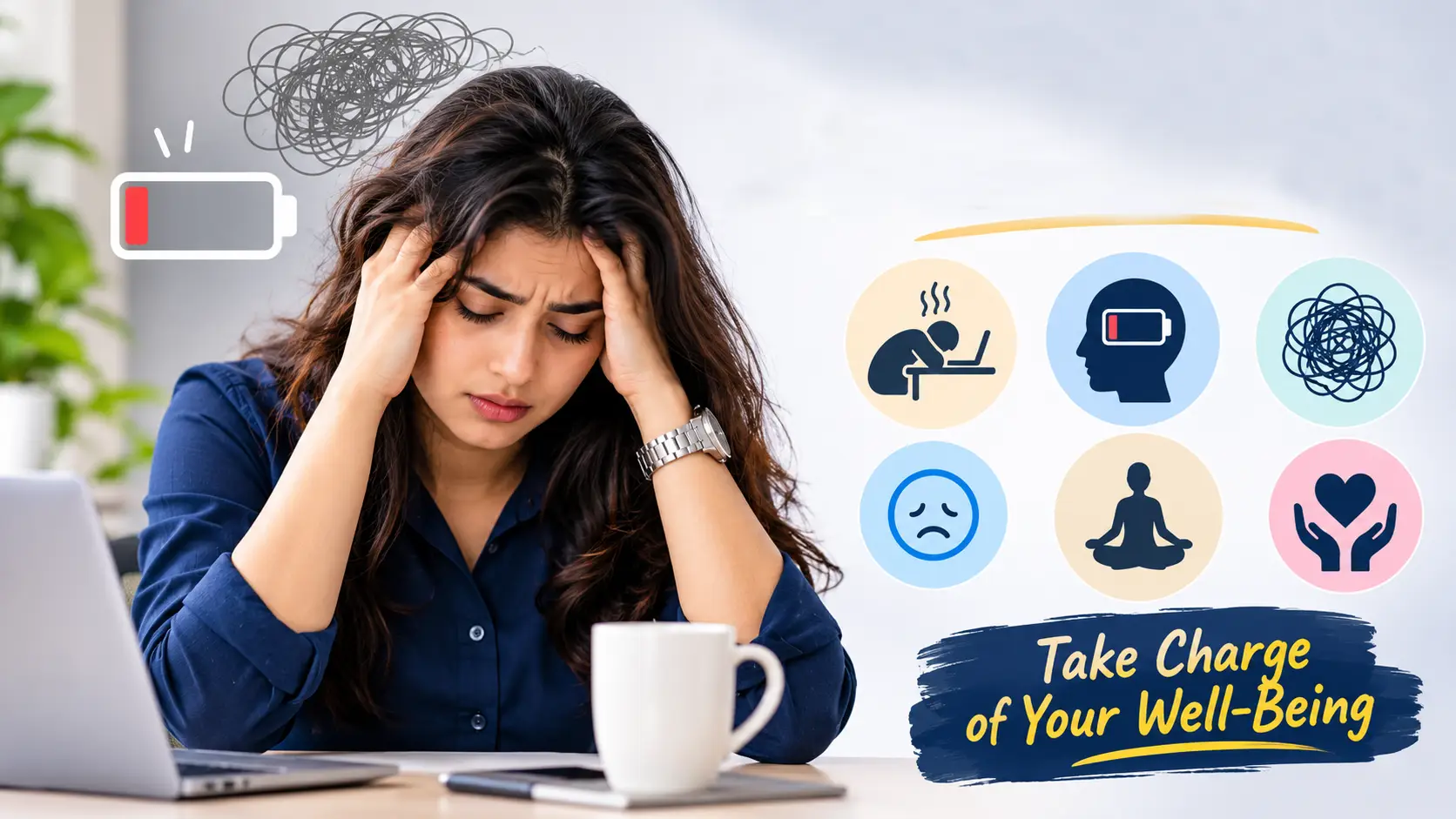


You know and are aware when you are physically tired. A few nights of extra sleep can leave you refreshed—but mental or emotional exhaustion hits differently. Signs of emotional exhaustion are also difficult to recognize; things might seem normal, your daily routine remains the same, and you work through activities like you always did. But after you are done, the question remains—why does my everyday routine feel like a burnout?
“The things that you enjoyed or cared about can feel like a chore requiring double the effort. You can feel distracted, zoned out, or emotionally unresponsive. You wake up every day feeling like you never slept.”
You can feel a consistent fatigue disproportionate to the changes in your work life or how much you sleep at night. Conversations are tiring, concentration is harder, and responding to basic messages seems like a chore. Instead of linking this to a specific life event, you feel emotionally spent and overwhelmed by life itself.
It is a state where you deplete your resources faster than you can restore them. Because it is so negligible and can be misunderstood as tiredness that “doesn’t go away,” here is a guide to recognize the signs of emotional exhaustion and to protect yourself from hidden, underlying mental or emotional exhaustion.
What is psychological emotional exhaustion?
Defining Emotional Exhaustion in Clinical Psychology
Emotional exhaustion refers to the chronic state of emotional depletion and drainage of psychological and mental resources. As the name might imply, it is not just about emotional tiredness but also mental tiredness, on the contrary.
Signs of emotional exhaustion come from prolonged emotional demands, continuous stress, or caregiving responsibilities. It happens when your emotional state has remained heightened for so long that it can’t return to its normal levels for operational resilience. Psychologists compare emotional resources to physical energy. You feel like your internal battery is drained out, and you are working even when your switch’s about to turn off.
Every day, individuals utilize energy to regulate their emotions, social interactions, problem-solving, coping with uncertainties, taking care of other individuals, etc. Under normal circumstances, adequate recovery would consist of sleep, social interactions, enjoyable events, etc.
On the other hand, if the recovery process is unable to match the demands, the emotional resources will be gradually depleted.
In contrast to acute stress, emotional exhaustion involves experiencing a feeling of being psychologically spent. The signs of emotional exhaustion usually includes:
- Being emotionally “exhausted”
- Feeling mentally “worn out”
- Not having any interest in doing something
- Feeling disconnected from oneself
- Feeling emotionally numb
- Finding it hard to care about anything anymore, even those things that you cared about or enjoyed in the past
The individual is not necessarily unable to function. On the contrary, emotionally exhausted people can cope with routine tasks for months and even years without recognizing the problem. The process of being emotionally exhausted is more indirect than a transparent physical depletion of energy. It stems gradually from chronic stress and unaddressed conflicts. It makes you feel drained, cynical, and emotionally numb. The difference between stress and emotional exhaustion is that the former is overengagement or stimulation, while the latter comes from chronic or prolonged stress. Stress makes you say, “I have too much to do.” Emotional exhaustion says, “I have nothing left in myself to give.”
What causes emotional exhaustion?
Chronic Occupational Stress
It may be characterized by:
- Unreasonable demands on a person
- An excessive workload
- Limited control over duties
- Deadlines all the time
- Uncertainty about one’s employment
- Complex relations with one’s superiors
Gradually, the person starts investing more effort into coping than recovering. While being able to function well, they become emotionally exhausted over time.
For many professionals, signs of emotional exhaustion come not from dislike towards the occupation but from functioning in survival mode without recovering.
Caregiver Burden
Parents, nurses, psychotherapists, teachers, people who take care of sick relatives, etc., are especially at risk of developing signs of emotional exhaustion.
Empathy, emotional regulation, patience, and responsiveness are needed to provide quality care. Emotional resources may be exhausted due to constant focus on other people’s needs and neglecting personal recovery.
Such a state is also known as compassion fatigue. The person may still care for others but have no emotional resources left to do it.
Chronic Trauma and Emotionally Threatening Experiences
Past or present trauma creates chronic emotional arousal. They may be represented by:
- Childhood neglect
- Emotional abuse
- Domestic violence
- Harassment at work
- Bullying
- PTSD
Being in a constant state of alert uses enormous psychological resources, eventually contributing to emotional exhaustion.
Emotional Suppression
People who habitually suppress emotions are at increased risk. Instead of processing feelings like anger, sadness, disappointment, fear, etc., they push them aside just to sustain a day longer. They tell themselves to keep pushing forward and continue working. Self-control can be exhausting behind the scenes, having spent years saying, “It doesn’t bother me.”
Other causes include financial strain and major stressors like life transitions, perfectionism, lack of self-care, and people-pleasing.
How to know if you are emotionally exhausted
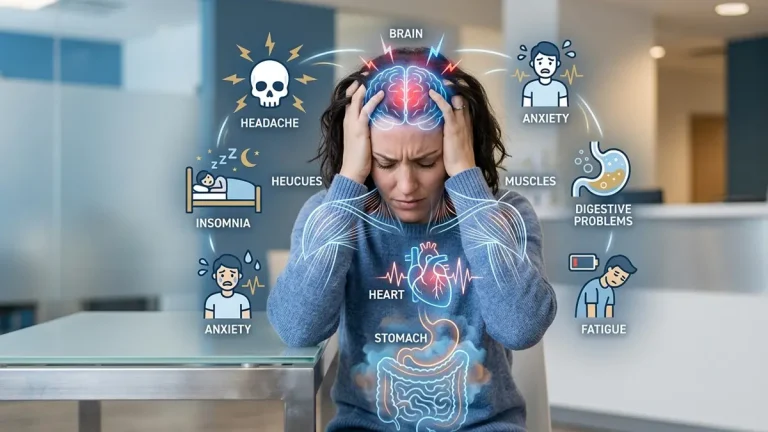
Emotional exhaustion affects the entire system in a comprehensive way.
Physical signs of emotional exhaustion
- Persistent fatigue: You know that you have had your share of sleep; still, the noticeable tiredness won’t go away, as if it wasn’t the answer.
- Sleep disturbances: Sleep may become fragmented, reduced, or result in insomnia. The restorative quality of sleep is reduced.
- Headaches and muscle tension: Muscle and stomach tension and body pain become more pronounced with emotional exhaustion. These symptoms reflect a long-term activation of the body’s stress response system. This includes neck tension, jaw clenching, frequent headaches, and body aches.
- Increased illness: Sustained stress can affect immune functioning. People may notice they become sick more frequently, recover slowly, and experience unexplained and unbacked physical complications.
Psychological Signs of emotional exhaustion
- Emotional unresponsiveness: One of the signs of emotional exhaustion is emotional blunting. One might assume that emotions might be heightened. Instead, a person may feel disconnected from them. Things that once brought joy no longer feel exciting. Difficulties may no longer trigger emotional reactions.
- Cynicism and detachment: People get detached from work, regular environments, relationships, and responsibilities. It feels like you are conserving your emotional energy, but you are actually getting detached from social connections. You might feel more skeptical of people and treat them like cold tasks. Routine work seems meaningless, less idealistic, energy-consuming, and mundane.
- Irritability: Minor inconveniences may trigger disproportionate anger and frustration. This is because of reduced emotional tolerance.
- Feeling overwhelmed: Answering emails, socializing, and calling people may feel like requiring a huge amount of energy and may seem pointless.
Cognitive signs of emotional exhaustion
- Difficulty concentrating: You might lose focus, read a paragraph over and over, zone out of conversations, or experience brain fog.
- Memory problems: Working memory and cognition decline under chronic psychological strain on the brain.
- Decision fatigue: Small necessary decisions, even what to eat, become an overwhelming burden of a decision.
Behavioral Signs of emotional exhaustion
- Social Withdrawal: It is common for those suffering from emotional exhaustion to withdraw socially. They might cancel dates, ignore social interactions, or withdraw entirely. It does not mean that they have a negative attitude towards others; interacting with other people simply consumes their emotional resources.
- Poor Performance: Even when putting in a lot of effort, performance may be low. Tasks take longer; one lacks motivation and creativity.
- Escapism: To deal with their state of mind, some individuals may engage in escapism, such as:
- Watching TV all day
- Constant scrolling through the web
- Comfort eating
- Working extra hours
- Gambling or gaming
- Substance abuse
Difference between depression and emotional/mental exhaustion
As symptoms overlap, emotional exhaustion is sometimes confused with depression. The latter is a clinical diagnosis and a mental health condition, while the former is recognized as an occupational phenomenon. It occurs in cases of “excessive emotional demands on an employee during interpersonal communications” in an organization.
Characteristics and signs of emotional exhaustion consist of the following:
- Feeling exhausted
- Decrease in motivation
- Emotional exhaustion
- Cognitive problems
- Feeling relieved when the stressor goes away
However, the individual will be capable of enjoying himself under certain conditions.
Depression is a mental illness characterized by chronic alterations in mood, cognition, behavior, and functioning. It is a clinical category of mental disorder that cannot be managed with lifestyle changes and needs professional supervision.
Typical characteristics include:
- Chronic sadness
- Hopelessness
- Feelings of worthlessness
- Lack of enjoyment
- Impairment
- Suicidal ideation
Symptoms persist even when the current stressor improves. Signs of emotional exhaustion and depression overlap because of social withdrawal, emotional emptiness, fatigue, and poor concentration. Emotional exhaustion increases the risk of depression.
How to get rid of and manage emotional exhaustion
Learning to say no to your coping mechanisms is the first step. Accept your burnout and choose what’s best for you instead of stretching your capabilities.
- Choose rest beyond just sleep.
Rest doesn’t mean blankly staring at walls like you always do as comfort during emotional exhaustion; it means shutting down screens and winding down. It is important to connect with yourself and be aware of your internal circumstances. Understand the root cause of your issue and what’s causing it or binding you to it. Find out if it was in the past or if there are still strings attached. Understand the cause of your stress and signs of emotional exhaustion.
- Lower Emotional or Source Overload
The process of emotional recovery entails creating space. Think
- Setting boundaries
- Saying “no” more often
- Fewer unnecessary obligations
- Minimal exposure to continuous conflicts
It does not imply the avoidance of responsibility but the prevention of continuous emotional investment. It involves recognizing the source and reducing its complexity enough to breathe and recover.
- Establish a Connection With Your Emotions
Those who are emotionally depleted find themselves detached from their emotions. Activities such as journal writing, therapy, mindfulness, and reflection allow for re-establishment of emotions. Identifying and categorizing emotions reduces the work your body does to process them.
- Focus On True Recovery
Recovery, distraction, avoidance, and neglect are different things. Hours of scrolling through social media will provide temporary relief from reality, but not emotional restoration. Some common activities in recovery are
- Sleep
- Exercise
- Being outdoors
- Connecting with others
- Creativity
- Relaxation
Exhaustion is a physiological process that elevates your cortisol. This is why these lifestyle changes are necessary: try to sleep more and at regular times.
- Increase Social Support
Humans regulate emotions via connections. Engaging in conversation with trustworthy people, including friends, family members, support groups, or therapists, provides opportunities for emotional processing.
Social support does not reduce stress; it reduces the load of carrying it by oneself. Address your problem as much as you can and seek professional help if the symptoms persist for longer.
No. Emotional exhaustion is not recognized as a distinct mental health condition. However, it is an important psychological state that is often related to chronic stress, burnout, anxiety disorders, and depression.
It depends on the reasons for exhaustion, stress level, coping strategies, and support. Some individuals recover from emotional exhaustion in several weeks, but it may take a few months of changing their lifestyle or undergoing therapy.
Yes. Emotional exhaustion often harms physical health and causes conditions such as fatigue, sleep disorders, headaches, muscle aches, digestive problems, and an impaired immune system.
Not entirely. While emotional exhaustion is believed to be a major part of burnout, burnout also involves decreased achievement, detachment, and cynicism towards responsibilities.
Yes. When people experience emotional exhaustion, they tend to isolate themselves, become irritable, emotionally distant, or detached from family members.
You should think about professional help if your condition is getting worse, it interferes with your daily activities, it persists for several months, or it leads to anxiety or depression.